

When Life Speeds Up, What Do Changes in Sleep and Energy Reveal?
Late summer often flips the switch from flexible to full speed. As school starts, work schedules tighten, and routines shift, your body has to adapt to every single change.
You might notice trouble settling down at night, morning fatigue, digestive changes, or the return of an old symptom. While a busier schedule doesn’t always cause these issues, it reveals which part of your body has the least room left to adapt.
Your Body Has a Schedule Too
Your internal clock responds to regular signals from light, activity, meals, and sleep timing. Those signals help your body anticipate when it should be alert and when it should begin winding down.
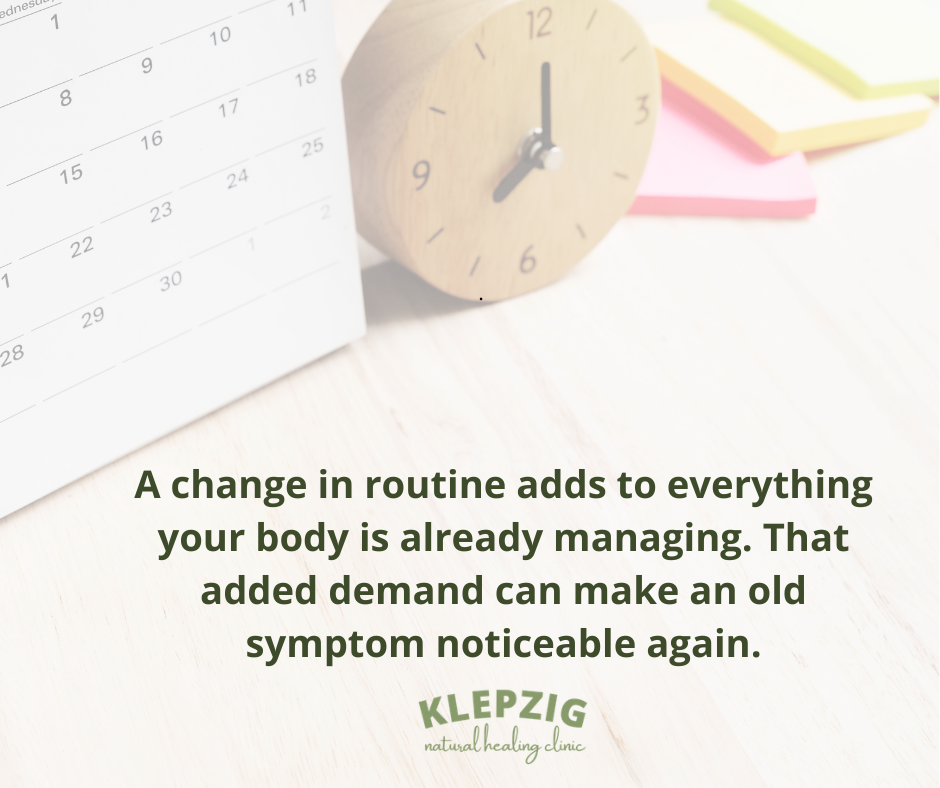
Summer often shifts those signals. Bedtimes get later, meals become less predictable, evenings stay active longer, and mornings may start at a different time each day. Returning suddenly to an early alarm and a fuller schedule asks the body to reorganize quickly.
The body is also managing the physical, chemical, and emotional stresses already present. When one area has been working harder to maintain normal function, the additional demands of a changing routine can make that strain easier to see.
What Becomes More Noticeable When Life Speeds Up?
When patients come into my office, I do not assume the loudest symptom automatically identifies the underlying problem. Sleep, energy, digestion, blood sugar regulation, hormones, nutritional status, and the stress response influence one another. One area may compensate for another without producing an obvious symptom until a change in routine adds more demand.
One person may have trouble falling asleep even though they are exhausted. Another may sleep through the night but wake up drained. Someone else may notice cravings, irritability, headaches, digestive changes, or the return of a familiar symptom.
These patterns can provide clues about which area is having the most difficulty keeping up. As I explain in Why Your Body Loses Balance: Understanding the Weakest Link in Your System, I begin by looking for the organ, gland, tissue, or system under the greatest strain. Supporting that area can improve the way the rest of the system functions rather than chasing every symptom separately.
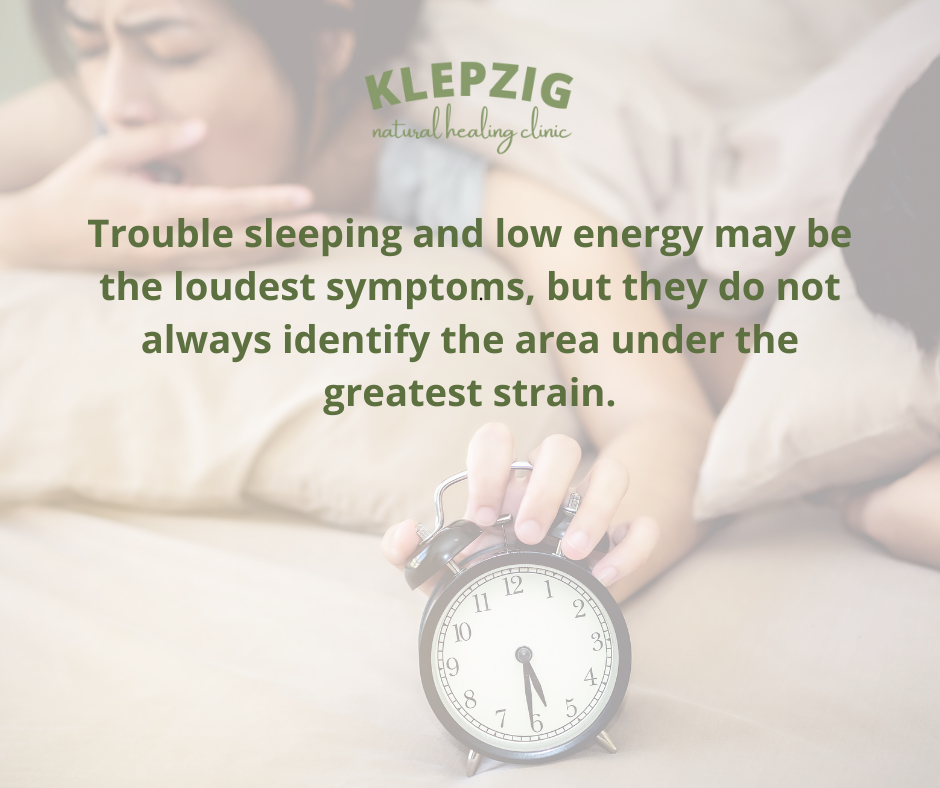
Sleep deserves particular attention because it is one of the basic requirements for recovery. If you are not sleeping well, everything else becomes harder. At the same time, I do not reduce every sleep problem to bedtime habits. Going to bed earlier may help with timing, but it will not necessarily explain why the body cannot settle, recover, or maintain steady energy.
Finding the Right Starting Point
Through Advanced Energy Medicine, I evaluate how the body responds to information involving organs, glands, foods, nutrients, stressors, and other physiological patterns. I combine those findings with your symptoms, history, nutrition, sleep patterns, and relevant outside testing.
If sleep is the main complaint, we examine the sleep pattern while also looking for what may be interfering with the transition into rest. Digestion, blood sugar regulation, hormonal patterns, nutritional needs, and the body’s response to stress may all influence how easily you settle at night and how well you recover.
Fatigue requires the same kind of reasoning. More sleep is helpful when lack of sleep is the problem, but fatigue can involve several overlapping factors. My job is to sort through those factors and identify the most useful priority instead of throwing a little something at everything and hoping one of them behaves.
Help Your Body Adjust When Routines Change
A structured routine can be beneficial. The difficulty usually comes when several changes occur at once and the body is expected to catch up immediately.
When possible, begin shifting sleep and wake times gradually instead of waiting until the night before the new schedule begins. Keep meals reasonably consistent, particularly when busy days tend to push dinner later or lead to skipped meals. A quieter transition between the active part of the day and bedtime can also help restore more predictable signals.
For general sleep support, several nutritional and herbal products come to mind.
Standard Process Min-Tran: Foundational Nervous System Support. Combines magnesium, calcium, iodine, and whole food ingredients to help support steady nervous system function and stress resilience.
Standard Process Min-Chex: For Mental & Emotional Strain. Offers broader nutritional support when a busy schedule leaves you feeling mentally wound up or unable to transition into rest.
MediHerb Valerian Complex: Direct Relaxation Support. Ideal when difficulty settling down or falling asleep is your main challenge.
MediHerb Nevaton Forte: Comprehensive Nervous System & Mood Support. Best when sleep disruptions accompany overall stress, emotional strain, or lowered mood.
Ready to find your starting point? If routine changes repeatedly disrupt your sleep or energy, an individualized evaluation can pinpoint where your system needs support.
Learn more about our healing approach or shop Standard Process and MediHerb products.
Let’s see what we can accomplish together. – Dr. Brian Klepzig
This content is for educational purposes only and is not intended to diagnose, treat, cure, or prevent any disease.
Join Our Natural Healing Community
Subscribe below to receive vital insights on holistic health, clinical nutrition, and natural wellness. We share our latest articles directly to your inbox to help support your healing journey.