

Immune Balance: Why Some People Stay Well and Others Do Not
One of the most common questions I hear in the office is this: Why do some people seem to stay well through every season while others catch every single bug that goes around?
The answer is not always as simple as “your immune system is weak.” That can be part of the picture, but it is not always the whole picture.
What we really want is immune balance.
More specifically, we want an appropriately reactive immune system.
If your immune system is underactive, sluggish, or slowed down by stress, toxicity, nutrient depletion, or chronic strain, it may not respond quickly enough.
If your immune system is in hyperdrive all the time, that can show up as allergies, inflammation, and autoimmune-type patterns.
Neither extreme is ideal. The goal is not to push the immune system harder. The goal is to help it respond appropriately.
Your Immune System Has Two Main Jobs
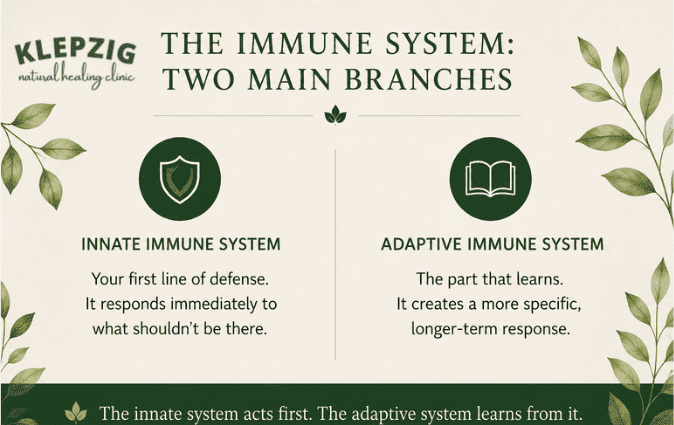
Your immune system has two major branches: the innate immune system and the adaptive immune system.
The innate immune system is your first line of defense. It is built in. It does not have to be taught. It responds to what should not be there and starts the process immediately.
The adaptive immune system is the part that learns. It is trained over time. It creates a more specific, longer-term response after the innate immune system identifies what is going on and presents that information.
In other words, the innate system acts first. The adaptive system learns from it.
When the innate immune system is strong and responsive, the rest of the immune process has a much better starting point.
When the Immune System Is Underactive
Some people seem to catch everything that goes around.
In a case like that, I usually think about one of two possibilities.
Either they really are picking up new bugs over and over again, or they are dealing with old, lingering bugs in the system that flare up whenever stress, fatigue, or poor recovery pushes the body past its ability to keep them quiet.
That is an important distinction to make.
The immune system may not simply need “more stimulation.” It may need better support, better nutrients, better stress adaptation, better detoxification, and better vitality.
When the immune system is underactive, people may notice:
- Sluggish recovery and a feeling that they cannot bounce back
- Recurring seasonal challenges that linger too long
- Low physical stamina and chronic fatigue
- Feeling completely run down after periods of routine stress
This is where we look at the bigger pattern, not just the latest symptom.
When the Immune System Is Overactive
The other side of the equation is immune hyperactivity.
An immune system in hyperdrive can be just as inefficient as one that is underactive.
When the system is constantly overreacting, it burns an enormous amount of energy, creates systemic inflammation, and may start responding too strongly to things that should not create such a dramatic reaction.
This loud, inefficient hyperactivity often presents as:
- Heightened seasonal and environmental sensitivities
- Frequent, uncomfortable allergy-type symptoms
- Persistent joint discomfort and skin irritation
- Reactivity to foods or common everyday triggers
When the system is overreactive, it is operating with a loud voice but very little precision. That is not true immune strength.
That is imbalance.

The Goal Is Immune Balance
This is why I do not like to talk about the immune system as something we simply “boost.”
Boosting an already overactive immune system is not the goal. Stimulating a depleted system without understanding why it is depleted in the first place misses the mark entirely.
The better question is this:
What does this person’s immune system need in order to respond appropriately?
Sometimes the body needs immune support. Sometimes it needs modulation. Sometimes it needs help adapting to stress.
Sometimes the immune system is being drained by another system, such as the liver, gut, lymphatic system, adrenal system, or blood sugar regulation.
This is why the starting point matters. Immune balance is not about doing more to the body. It is about understanding what the body is asking for.
How Advanced Energy Medicine Testing Helps Us See Immune Stress
During an evaluation, I am looking at how the body is functioning as a whole.
The immune system does not operate in isolation. It is constantly affected by nutrition, stress, toxicity, chronic inflammation, digestive function, lymph flow, organ vitality, and hidden stress patterns that may have been present for years.
Advanced Energy Medicine testing helps me sort through that complex information.
I may look at the thymus, spleen, lymphatic system, digestive system, liver, and other organ or gland patterns to determine where the body is struggling.
Sometimes the immune system needs direct support. Other times, the immune system is struggling because another system has become the weak link.
If we only chase immune symptoms without asking why the immune system is struggling, we may miss the deeper pattern.

Stress and the Immune System
Stress is a major part of this conversation.
Physical, chemical, and emotional stress all affect immune balance. The body can adapt to heavy stress loads for a while. That is what it is designed to do.
But if the pressure keeps coming, the body eventually has to borrow energy from somewhere. That borrowed energy may come from sleep, digestion, hormone balance, detoxification, or immune function.
This is where adaptogens can become very useful.
Adaptogens are herbs that help the body adapt to stress. They do not simply force the body in one direction. They help support the system so it can respond more appropriately to the stress of daily life.
Some people are running too fast and need help calming and grounding the system. Others are running too slow and need more stamina, resilience, and vitality. That is where individualized support matters.
We will talk more about adaptogens in the next blog, because stress adaptation deserves its own conversation. Subscribe to our Vital Insights and receive notifications when new content is published.
Subscribe to Vital Insights!
Whole Food and Herbal Support for Immune Balance
Whole food nutrition and herbal therapies can be extremely useful when chosen for the right pattern.
Again, the goal is not to randomly stimulate the immune system. The goal is to understand what type of support the body is asking for.
One person may need help waking up a sluggish immune response. Another may need help calming an immune system that is already running too hot. Another may need immune stamina because long-term stress has worn the system down.
This is why I do not look at immune products as “one size fits all.”
I look at the pattern first.
If you tend to catch everything that goes around…
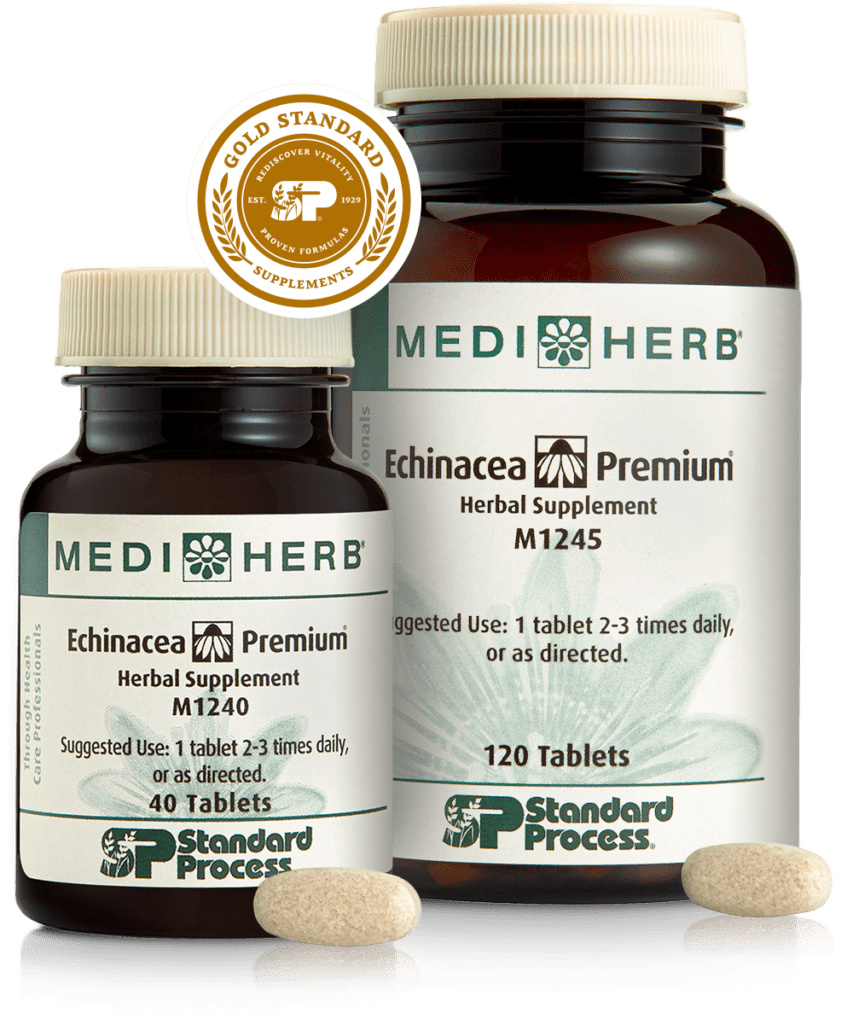
This is one of the first products I think about when someone seems to pick up every bug that passes through the room or takes longer than expected to bounce back.
Echinacea Premium supports the innate immune response, which is your first line of defense. MediHerb’s Echinacea Premium is very different from many general echinacea products sold. MediHerb uses the roots of Echinacea angustifolia and Echinacea purpurea, which is important.
The root contains key active compounds, including alkylamides, that are associated with healthy immune system function.
This is one of the reasons I value this product when I am looking at innate immune support.
This may fit when:
You feel like your immune system is slow to respond, you get run down easily, or you do not rebound well after seasonal immune challenges.
If your immune system feels tired, worn down, and low on stamina…
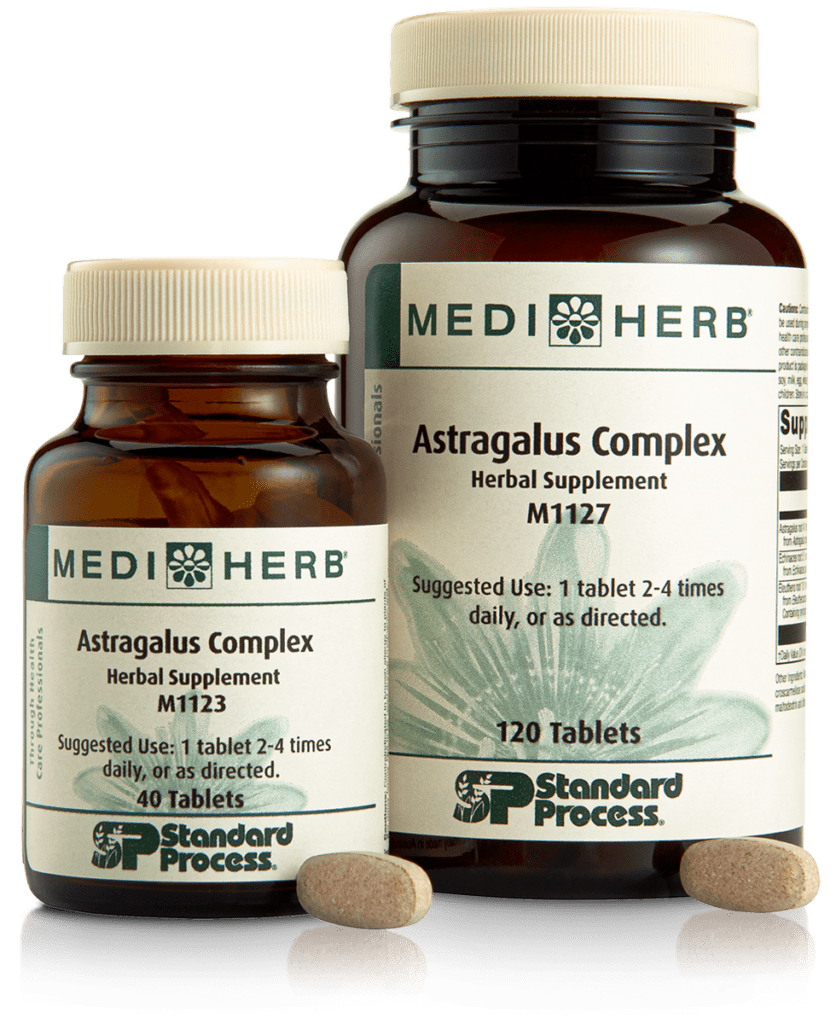
MediHerb Astragalus Complex
Astragalus Complex is one of my favorite products when the immune system feels tired rather than inflamed.
In Chinese medicine, Astragalus is considered a tonic herb, which means it helps build vitality and resilience over time. Astragalus Complex contains Astragalus, Echinacea purpurea root, and Eleuthero to provide adaptogenic immune system support.
That gives us a combination of immune support, stress adaptation, and stamina support.
This is not just about fighting something off. It is about helping the body become more resilient so it can respond better over time.
This may fit when:
You are not necessarily “sick,” but your resistance feels low, your recovery is slow, stress has been long-term, or your system feels depleted.
If your immune system seems overactive or reactive…
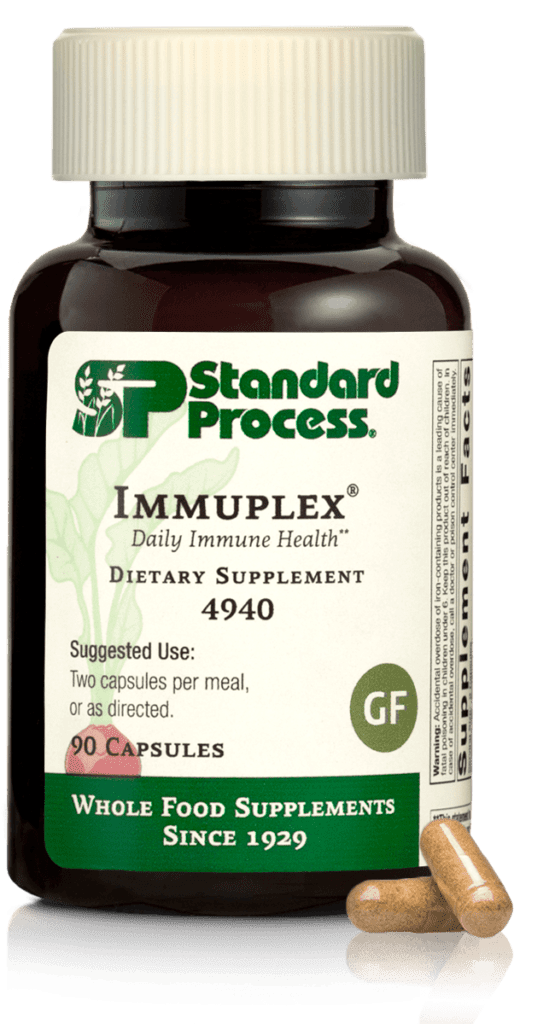
Standard Process Immuplex
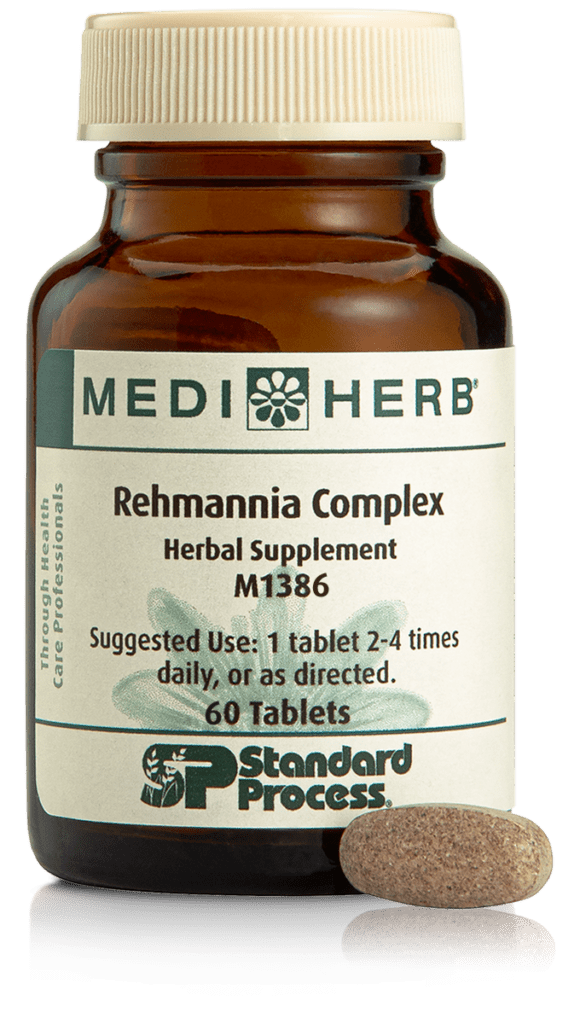
MediHerb Rehmannia Complex
This is where the conversation changes.
If someone is dealing with allergy-type patterns, inflammation, or autoimmune-type concerns, I am not thinking, “Let’s stimulate the immune system harder.” That can be the wrong direction.
Immuplex is a daily immune support product that provides nutritional support for immune cells and immune-associated organs, as well as both the adaptive and innate immune response. It also supports the body’s normal inflammatory response function.
Rehmannia Complex is one I think about when the immune system needs help staying more appropriately reactive, not too high and not too low.
This may fit when:
Your immune system seems to overreact, you deal with sensitivity patterns, inflammation, allergy-type symptoms, or your body seems stuck in a high-alert state.
If you are struggling to move through a seasonal immune challenge…
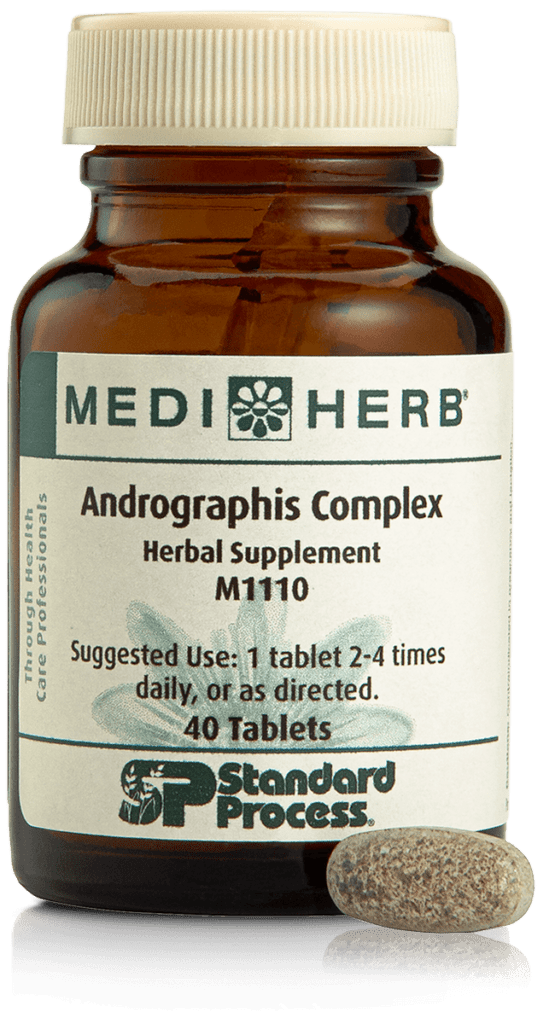
Andrographis Complex contains Andrographis, Echinacea, and Holy Basil. I tend to think about this product more for short-term immune support, especially when someone is struggling to move through a seasonal immune challenge.
This may fit when:
You feel like your body needs focused support during a short-term seasonal immune situation, especially when you are having a hard time bouncing back.
Stress, Immune Balance, and What Comes Next
There is another important layer to this conversation.
When we talk about immune balance, we cannot separate it from the body’s ability to adapt to stress. Physical stress, chemical stress, emotional stress, poor sleep, blood sugar swings, chronic inflammation, and long-term pressure all pull from the same energy bank. Over time, that stress load can wear down immune resilience.
This is where adaptogens become very useful.
Adaptogens are herbs that help the body adapt to stress. They do not simply force the body in one direction. They help support the system so it can respond more appropriately to the daily demands being placed on it.
Some people need help calming and grounding the system. Others need more stamina, resilience, and vitality. And some people need immune support and stress support working together because the two are so closely connected.
There is more to this story, and adaptogens deserve their own conversation.
In the next blog, we will take a deeper look at adaptogenic herbs, how they support stress resilience, and why products like Rhodiola & Schisandra, Eleuthero, and other MediHerb adaptogen formulas may be helpful when stress has been draining the system for too long.
The Bigger Picture
Your immune system is not separate from the rest of your physiology.
It is tied to your stress response, your gut, your liver, your lymphatic system, your nutrition, your blood sugar, your sleep, and your overall vitality.
That is why immune support should not be a guessing game.
Some people need support for an underactive immune response. Some need modulation for an overactive response. Some need adaptogenic support because stress has worn the system down. Some need foundational nutrition because the body simply does not have the raw materials to respond well.
The goal is to find the pattern.
When we understand what is draining the immune system, we can support the body in a more precise and meaningful way.
Stay tuned for our next blog, where we will dive deeper into adaptogens and how they help the body adapt to stress.
Let’s see what we can accomplish together.
Join Our Natural Healing Community
Subscribe below to receive vital insights on holistic health, clinical nutrition, and natural wellness. We share our latest articles directly to your inbox to help support your healing journey.